
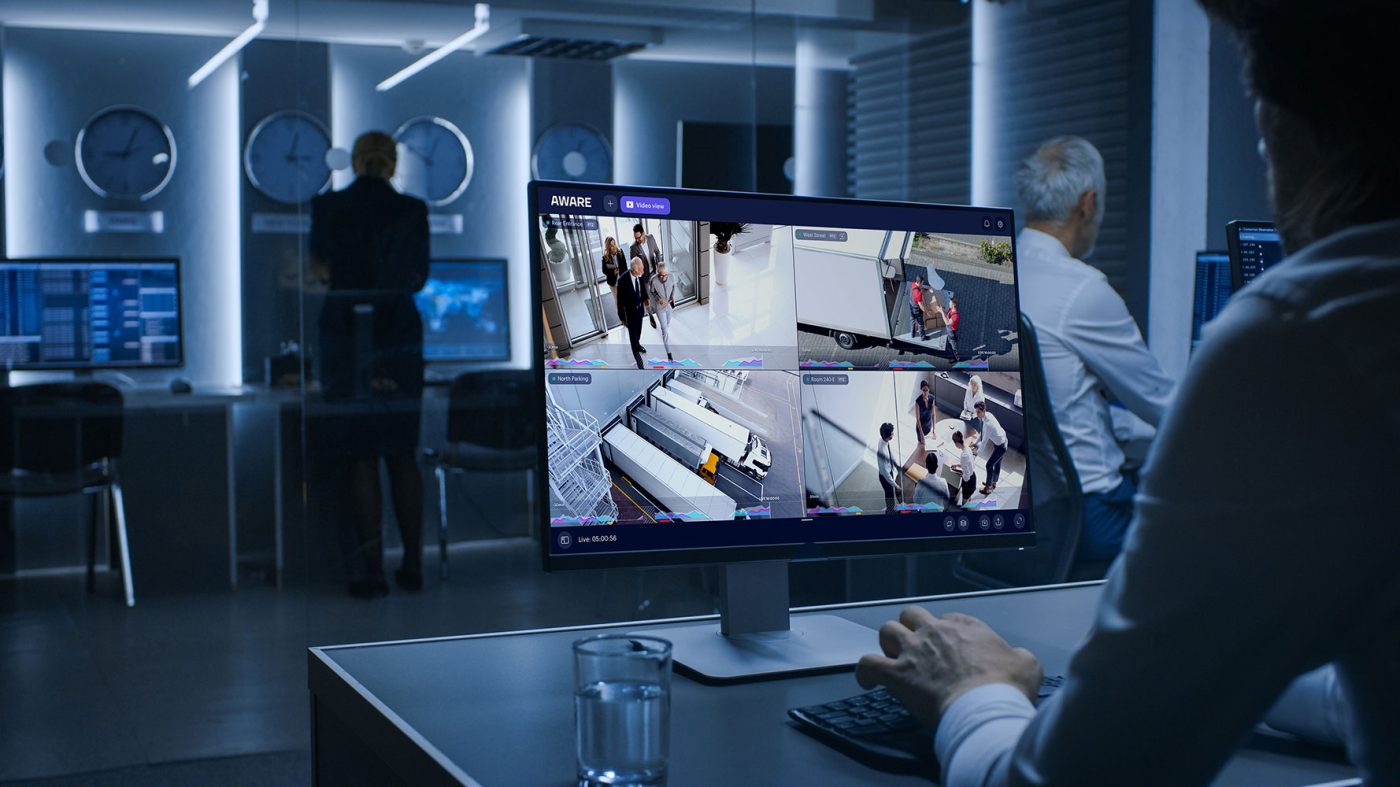
A Virtual Guard escalation plan tells a remote monitoring team exactly what to do after an event has been reviewed and requires attention. It defines how serious different situations are, who should be contacted, when an audio warning is authorized, when an event should be escalated, and how the response should be documented.
For a commercial property, this plan is just as important as the cameras and monitoring technology behind the service.
Without clear instructions, even a well-designed monitoring system can create uncertainty. An operator may see activity that deserves attention but still needs to know whether the person is authorized, who should be contacted first, whether a voice-down warning is appropriate, or what circumstances require a different response.
A strong Virtual Guard escalation plan removes that uncertainty by turning monitoring into a repeatable response process designed around the way the property actually operates.
What Is a Virtual Guard Escalation Plan?
A Virtual Guard escalation plan is a documented set of instructions that explains how monitoring personnel should respond to different types and levels of activity at a commercial property.
It is essentially the response side of a remote monitoring program.
The monitoring system may bring an event to an operator’s attention, but the escalation plan answers the next questions:
How serious is the situation? Who needs to know? What is the operator authorized to do? What happens if the first response does not resolve the event?
Those decisions should be made before an incident occurs whenever possible.
A warehouse may have different procedures for an unknown person near a loading dock than for someone attempting to enter a secured interior area. An apartment property may treat activity around a pool differently from activity in a parking area. A construction site may expect workers and deliveries early in the morning but consider the same activity unusual late at night.
The best remote monitoring response plan reflects those differences rather than treating every alert the same way.
Start by Defining Event Severity Levels
One of the first steps in building a security escalation procedure is deciding how events should be categorized.
Not every situation requires the same urgency.
A person briefly walking through the edge of a monitored parking area is different from someone attempting to force open a secured door. An unexpected delivery vehicle may require verification, while visible smoke, a medical emergency, or an immediate threat to a person requires a very different response.
A practical escalation plan can organize events into general severity levels.
| Severity Level | General Description | Example Response Direction |
| Low | Activity that appears unusual but does not present an immediate concern | Review, observe, and document if needed |
| Moderate | Activity that appears unauthorized or requires intervention | Continue monitoring, use an authorized audio warning, or contact a designated property representative |
| High | Activity suggesting an active security or safety concern | Follow urgent contact and escalation procedures |
| Emergency | Circumstances involving an apparent immediate threat to people, property, or life safety | Follow the property’s emergency procedure and applicable emergency-notification instructions |
These categories should not be treated as universal definitions. Each commercial property should determine what situations belong in each level based on its operations, risks, and policies.
The purpose is consistency.
When an operator sees an event, the plan should make it easier to understand how the business expects that situation to be handled.
Establish Primary and Secondary Contacts
An escalation plan needs more than one name and phone number.
Businesses change. Managers take vacations. Phones are turned off. Employees leave the company. Someone who normally responds within minutes may be unavailable when an incident occurs.
For that reason, a remote monitoring response plan should establish a clear contact order.
The primary contact is typically the person responsible for receiving notifications during the relevant monitoring period. This might be a facility manager, property manager, security manager, business owner, operations supervisor, or another authorized employee.
The secondary contact provides backup when the first person cannot be reached.
For larger organizations, different properties or event types may require different contacts. A loading-dock issue may go to an operations manager, while an access-control problem may require a facility or security contact.
The monitoring provider should know who has authority to make decisions and when each person should be contacted.
Contact information should also include more than a phone number when appropriate. The plan may specify preferred notification methods, availability windows, and who should be contacted when the normal management team is unavailable.
Most importantly, contact information needs to remain current.
A response plan with outdated names and disconnected phone numbers can fail even when the monitoring system works exactly as intended.
Decide When Audio Warnings Are Authorized
If a Virtual Guard system includes live audio deterrence or remote speakers, the escalation plan should clearly define when monitoring personnel are allowed to use them.
Voice-down warnings can be useful when someone appears to be in an area without authorization and the situation is appropriate for remote intervention.
But an audio warning should not automatically play whenever unusual activity occurs.
Consider an employee entering a building after hours to complete approved work. A loudspeaker telling that employee to leave could create unnecessary confusion.
The same issue can occur with maintenance contractors, delivery drivers, residents at multi-family properties, or workers whose schedules have temporarily changed.
The plan should explain which monitored areas allow audio intervention, what types of situations justify a warning, whether live or prerecorded messages are preferred, and what should happen after the warning is issued.
It should also identify circumstances where operators should not use audio.
If the situation is unclear, if communication could increase risk, or if the property has specific restrictions on audio use, another response may be more appropriate.
The purpose of voice-down security is to provide another response option—not to turn every alert into an audible confrontation.
Build Employee and Vendor Exceptions Into the Plan
One of the most common reasons a monitoring program can become difficult to manage is legitimate activity occurring outside normal expectations.
Employees may stay late.
A maintenance contractor may arrive early.
A snow-removal company may enter the property overnight.
A cleaning crew may work after the building closes.
A temporary construction contractor may need access to an area that is normally restricted.
A strong Virtual Guard escalation plan should account for these exceptions.
That does not mean giving every possible visitor unrestricted access. It means giving monitoring personnel enough information to distinguish expected activity from activity that deserves additional attention.
Businesses should establish a process for communicating temporary schedule changes, authorized vendors, special projects, and other exceptions to the monitoring team.
For recurring vendors, the plan may document typical service windows and areas of the property they are expected to use.
For temporary access, businesses may need a simple way to notify the monitoring team before the activity occurs.
Human-verification becomes much more effective when the person reviewing the event understands what normal operations actually look like.
Plan for After-Hours Deliveries
After-hours deliveries deserve their own response rules for many commercial properties.
Warehouses, manufacturing facilities, marinas, dealerships, apartment communities, and other businesses may receive trucks or service vehicles outside regular business hours.
The challenge is that a legitimate vehicle arriving at midnight can look similar to unauthorized vehicle activity if the monitoring team has no context.
A remote monitoring response plan should establish which delivery areas may be used after hours, what schedules are expected, and how the monitoring team should handle an arrival that does not match the normal pattern.
For example, the plan may distinguish between a vehicle arriving at an approved loading dock and a vehicle entering an equipment-storage area where deliveries are not expected.
It may also explain who should be contacted when a driver arrives outside the approved delivery window.
The goal is not to make the monitoring team manage logistics for the business. It is to provide enough operational information to make better response decisions when unusual activity occurs.
Define the Escalation Sequence Before an Emergency
An escalation plan works best when each step follows logically from the one before it.
For many events, the process may begin with observation and verification. If the activity continues, an authorized audio warning or property notification may follow. If circumstances become more serious, the operator moves to the next level of the plan.
However, not every event needs to move through every step.
Some situations may require a more urgent response from the beginning.
The plan should therefore explain both how events escalate and when normal steps may need to be bypassed.
For example, the response to someone lingering near a closed gate may begin with observation. A visible emergency or an apparent immediate threat may follow a different procedure.
These decisions should be established with the business before the monitoring service goes live.
Monitoring personnel should not have to invent an emergency policy in the middle of an event.
Establish Law-Enforcement Notification Procedures Carefully
Law-enforcement notification should be clearly defined rather than assumed.
Businesses should work with their monitoring provider to determine what circumstances authorize or require an operator to request law-enforcement assistance and what information should be available when that request is made.
Procedures can vary based on the property, service agreement, alarm type, jurisdiction, and circumstances of the incident.
A monitoring provider should not promise that police will respond within a specific amount of time or that every verified event will result in dispatch.
The escalation plan should instead document the agreed process.
That may include what level of event requires notification, whether a designated property representative must be contacted first when circumstances allow, which property information should be provided, and how the operator documents the notification.
For businesses with multiple commercial locations, these procedures may differ by jurisdiction. Each property’s response instructions should reflect its own location and operating requirements rather than relying on one generic policy.
Know When Remote Monitoring Needs On-Site Support
A Virtual Guard can provide visibility, communication, and escalation, but remote monitoring cannot physically perform every security task.
If a gate is damaged, a door needs to be secured, an injured person requires assistance, or a physical inspection is necessary, someone may need to respond on-site.
The escalation plan should identify who handles those situations.
Depending on the property, that could be an employee, facility manager, maintenance provider, contracted guard, property-management representative, or emergency responder.
Defining this in advance helps avoid a common gap in remote monitoring programs: identifying an incident correctly but not having a clear next step when physical action is required.
Remote monitoring and on-site response should complement one another.
The role of the Virtual Guard is to provide awareness and follow the approved procedure. The plan should define who takes responsibility when the next step requires someone to physically be at the property.

Document What Happened and How the Event Was Handled
Incident documentation is an important part of a Virtual Guard escalation plan.
The purpose is not simply to create more paperwork. Good documentation helps the business understand how the monitoring process performed and what occurred during an event.
Depending on the monitoring service and event, documentation may include the time and date, property or camera location, activity observed, severity classification, verification performed, warnings issued, contacts notified, escalation steps taken, and available video references.
It may also note whether the event was resolved, remained uncertain, or required further follow-up.
This information can support internal incident review and help businesses identify patterns over time.
For example, repeated after-hours activity at the same gate may indicate that operating instructions need to be updated. Frequent alerts involving legitimate delivery vehicles may suggest that the delivery schedule provided to the monitoring team is incomplete.
Incident records may also support investigations or insurance reviews when relevant, but monitoring documentation should not be described as guaranteeing a specific legal, regulatory, or insurance outcome.
Its value depends on the quality of the available information and the circumstances of the event.
Test the Escalation Plan Before You Need It
A response plan should not be written once and forgotten.
Testing helps determine whether the process actually works.
A business may discover that the primary contact does not answer during certain hours. An audio warning may not be clearly audible in one part of the property. A monitoring operator may not have enough information to distinguish a vendor from an unauthorized visitor.
These problems are easier to correct during a controlled test than during a real incident.
Periodic reviews can also verify that contact information remains current and that monitoring instructions still match how the property operates.
For new installations, testing should be part of the setup process. After the system has been operating for a period of time, event history can help identify where procedures need to be adjusted.
The objective is not to create a plan that never changes.
The objective is to create a plan that improves as the business learns how the monitoring system performs in the real environment.
Update the Plan When the Property Changes
Commercial properties rarely remain exactly the same.
Employees change. Businesses add shifts. Buildings are renovated. Contractors begin long-term projects. A new tenant occupies part of a property. A loading dock changes schedules. Construction fencing moves. A marina becomes more active during the summer.
Any of these changes can affect a security escalation procedure.
A plan based on outdated operations may cause monitoring personnel to treat normal activity as unusual or fail to recognize that a previously normal situation now deserves attention.
Businesses should review the response plan whenever there is a meaningful operational change and on a regular schedule even when nothing obvious has changed.
The review should confirm contacts, monitoring hours, authorized access, vendor information, delivery schedules, audio-warning rules, emergency procedures, and any changes to monitored areas.
Security works better when the monitoring plan reflects the property that exists today—not the property that existed when the system was first installed.
Different Commercial Properties Need Different Escalation Plans
There is no universal Virtual Guard escalation plan.
A commercial swimming pool may prioritize after-hours access, gate activity, and contact with property management.
A construction site may need different procedures during active work hours and overnight periods.
A marina may have seasonal schedules, dock access, vendors, maintenance personnel, parking areas, and members arriving at different times.
A manufacturing facility may operate multiple shifts while maintaining restricted areas where after-hours activity needs closer review.
An apartment property may have residents, guests, delivery drivers, vendors, and maintenance workers entering shared areas throughout the day and night.
The response plan has to recognize those differences.
A generic template can provide a starting point, but the final procedure should be built around the property’s layout, operating hours, people, access patterns, liability concerns, and actual response resources.
How AI and Human-Verification Fit Into the Escalation Plan
AI-assisted analytics and human-verification can help identify and evaluate an event, but the escalation plan determines what happens after that evaluation.
This distinction is important.
Analytics may identify unusual activity. A trained monitoring professional can provide context. The response plan tells that person what action is authorized.
That creates a clear division:
Technology identifies. Human review interprets. The escalation plan directs the response.
When these pieces work together, businesses can create a more consistent monitoring process without expecting the technology or the operator to make every decision independently.
Frequently Asked Questions About Virtual Guard Escalation Plans
What is a Virtual Guard escalation plan?
A Virtual Guard escalation plan is a documented procedure that tells remote monitoring personnel how to respond after activity requires attention. It can define event severity, contact order, audio-warning authorization, emergency escalation, documentation, and other property-specific response instructions.
Who should be included on a remote monitoring contact list?
The contact list should include people who are authorized and available to make decisions for the property. Most businesses should have at least a primary and backup contact, while larger operations may assign different contacts for facilities, operations, property management, or specific locations.
Should a Virtual Guard issue an audio warning for every suspicious event?
No. Audio intervention should follow predefined authorization rules. Human verification, property conditions, event severity, and the response plan should help determine whether a live or prerecorded warning is appropriate or whether another response should be used.
How should after-hours employees and vendors be handled?
The monitoring plan should identify recurring schedules and establish a process for communicating temporary exceptions. Providing accurate information about authorized employees, contractors, deliveries, and service windows helps monitoring personnel distinguish normal operations from activity that may require additional attention.
When should law enforcement be notified?
Law-enforcement notification should follow the property’s approved escalation procedure and the applicable circumstances. The plan should define which situations warrant notification, what information the monitoring team should provide, and how the action is documented without promising a particular police response time or outcome.
How often should a Virtual Guard escalation plan be reviewed?
The plan should be reviewed periodically and whenever the property experiences a meaningful change, such as new operating hours, personnel changes, construction, new vendors, different access procedures, or changes to monitored areas. Testing and incident reviews can also reveal where response instructions need improvement.
Build the Response Plan Before the Incident Happens
Virtual Guard monitoring is most useful when everyone knows what should happen after an event requires attention.
A clear escalation plan establishes severity levels, contacts, intervention rules, exceptions, emergency procedures, documentation standards, and on-site responsibilities before those decisions have to be made under pressure.
Sourced Security Solutions works with commercial clients to build video surveillance, access control, and Virtual Guard solutions around the way each property operates. That includes looking beyond the equipment to help establish practical monitoring and response procedures that fit the business.
For commercial properties in Connecticut and supported areas of Rhode Island, contact Sourced Security Solutions to discuss Virtual Guard monitoring and how a property-specific escalation plan can support a more organized security response.