
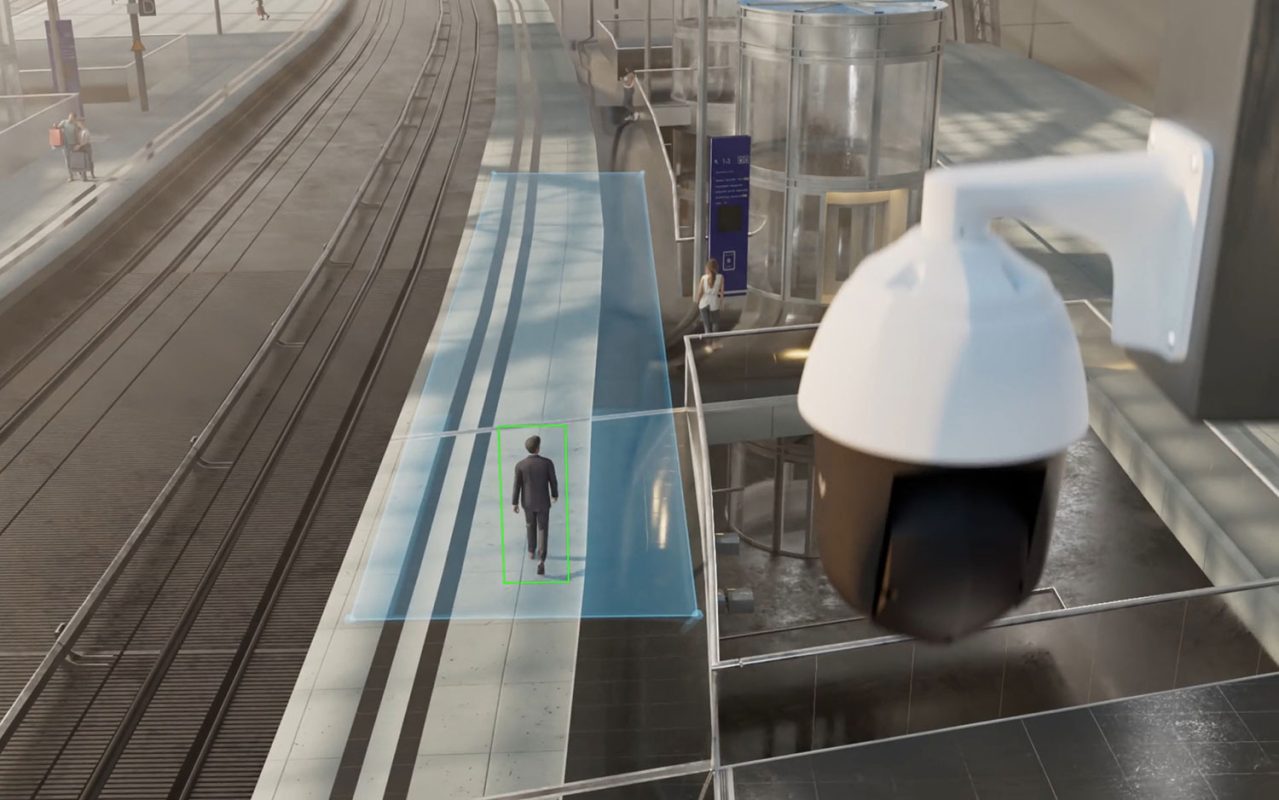
Installing security cameras at a commercial property involves more than choosing equipment and deciding where cameras should go. Businesses also need to think about employee monitoring, privacy, audio recording, access to footage, and any rules that may apply to the property or industry.
These questions are especially relevant when cameras are used inside workplaces, around employee areas, at professionally managed properties, or as part of a remote monitoring program.
Sourced Security Solutions provides commercial video surveillance for businesses and property managers. The company focuses on the physical security system itself, including video surveillance, access control, and Virtual Security Guard monitoring.
This article is for general informational purposes only and is not legal advice. Surveillance, employee-monitoring, audio-recording, and privacy requirements can vary based on the state, property, and way a system is used. Businesses should consult qualified legal counsel about the laws that apply to their specific location and surveillance setup.
What Should a Business Consider Before Installing Security Cameras?
There is no single rule that answers every commercial video surveillance question.
The requirements that apply can depend on where the property is located, whether employees may be monitored, whether the system records audio, where cameras are installed, and how recorded information is used.
Camera placement is one consideration.
Employee monitoring is another.
Audio recording can raise different legal questions from video recording.
Certain industries, leases, contracts, company policies, or property-management arrangements may also create requirements that need to be considered before installation.
For that reason, businesses should first identify what they want the surveillance system to accomplish. From there, they can determine which areas need cameras and consult qualified counsel when questions involve employee privacy, audio recording, notice, or other legal requirements.
Sourced Security can help with the design and installation of the physical security system. Legal questions about how surveillance laws apply to a particular business should be handled by qualified legal professionals.
Connecticut Businesses Should Review Employee Monitoring Requirements
Connecticut law includes specific provisions concerning electronic monitoring of employees.
Connecticut General Statutes § 31-48d addresses electronic monitoring by employers and includes cameras within its definition of electronic monitoring. The statute also contains employee-notice provisions and exceptions.
For businesses, the practical takeaway is that cameras used around employees should not be treated exactly the same as cameras used for every other security purpose.
Before installing surveillance in employee work areas, a Connecticut employer should review the proposed camera locations and determine whether employee-monitoring requirements apply.
Businesses should consult qualified legal counsel about how Connecticut’s notice requirements and exceptions apply to their particular workplace.
Camera Placement Requires Extra Care Around Employee Areas
Connecticut also places limits on electronic surveillance in certain employee areas.
Connecticut General Statutes § 31-48b addresses monitoring in areas intended for employee health, personal comfort, or protection of personal belongings. The statute includes examples such as restrooms, locker rooms, and lounges.
Businesses should therefore review more than the camera’s field of view when deciding where equipment should be installed.
An entrance, parking area, warehouse floor, loading area, exterior door, or other commercial work area may serve a legitimate security or operational purpose. Areas associated with personal privacy require a different level of consideration.
When a proposed camera location creates uncertainty, the business should obtain legal guidance before installation.
Video and Audio Recording Are Not the Same Thing
A security camera may include both video and audio capabilities, but businesses should not assume that the same rules apply to both.
Audio recording can involve separate interception, wiretap, consent, and privacy laws.
Those rules also differ between states.
For example, Massachusetts law contains strict restrictions concerning secret recording of oral communications. Rhode Island law uses a different consent structure for certain intercepted communications. Connecticut also has laws that can affect the recording or interception of communications.
Those differences are important for businesses operating across more than one state.
A company with properties in Connecticut, Massachusetts, and Rhode Island should not assume that one audio-recording policy works for every location.
If microphones or recorded audio are being considered, the business should review the applicable law with qualified counsel before enabling those functions.
An Audio Warning Is Different From Recording Conversations
Some commercial security systems may support an audio-warning function that allows a monitoring team to speak through equipment installed at the property.
That is different from using a microphone to record conversations.
For example, a Virtual Security Guard setup may allow a monitoring professional to speak up after reviewing activity that needs attention, provided the equipment and monitoring plan are configured for that function.
Businesses considering audio-enabled security should be clear about what the equipment actually does.
A system that broadcasts a warning is not necessarily performing the same function as a system that captures, listens to, or records conversations.
If a proposed setup includes audio capture or recording, the business should confirm the legal requirements that apply before using that feature.
Do Employees Need Notice About Security Cameras?
The answer depends on the location and how the surveillance is being used.
Connecticut’s employee-monitoring law includes notice requirements for covered electronic monitoring, along with statutory exceptions.
Rather than assuming every commercial camera requires the same notice, businesses should review how the law applies to the cameras they intend to install.
Some employers also maintain internal surveillance or monitoring policies that explain how security systems are used.
An internal policy may help employees understand the purpose of monitoring, but a company policy should not be treated as a substitute for any legal notice or other requirement that applies.
Businesses with properties in multiple states should review the requirements at each location rather than applying one policy everywhere without review.
Are Security Camera Signs Required?
There is not one universal sign requirement that applies to every commercial camera in every state.
Whether notice is required can depend on the jurisdiction, the type of monitoring, and the people being monitored.
Connecticut’s employee electronic-monitoring law contains provisions regarding notice to affected employees, including posted notice in certain circumstances.
That should not be interpreted to mean that every commercial camera everywhere requires the same sign.
Some businesses may choose to post surveillance notices even where they are not specifically required as part of their general property-management or security procedures.
When signage is being used to satisfy a legal requirement, the business should confirm that the notice meets the requirements applicable to that particular situation.
Can Businesses Use Cameras Around Parking Lots and Exterior Areas?
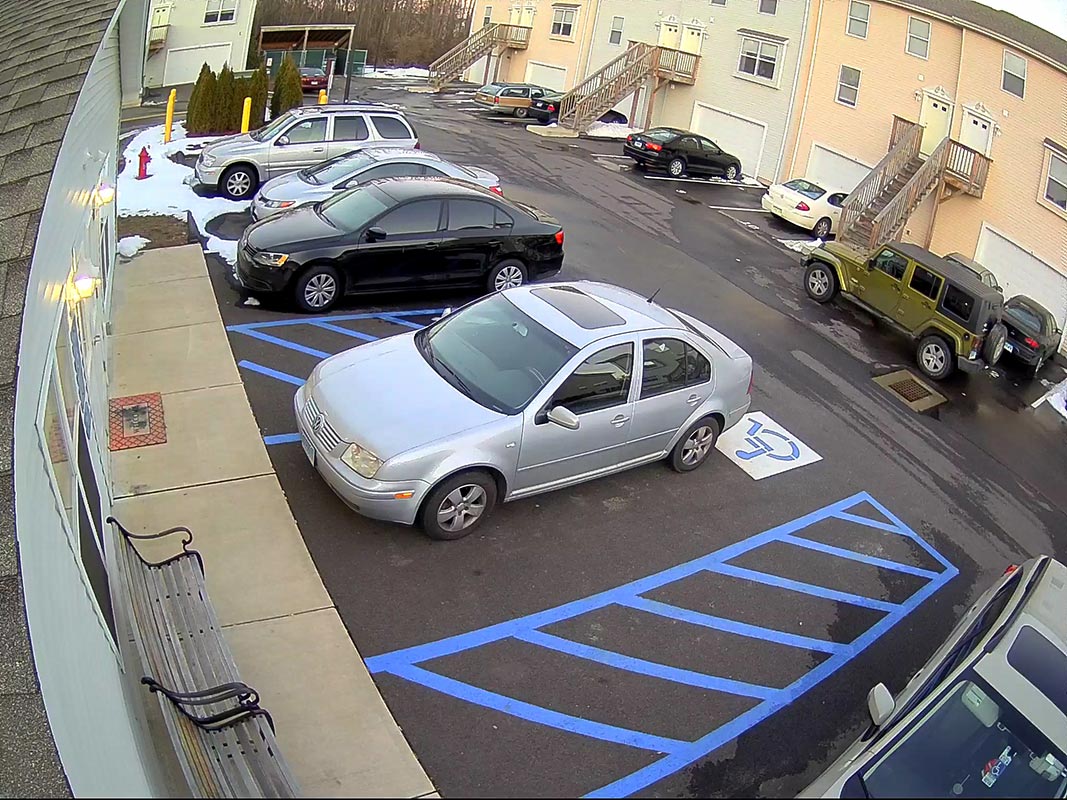
Parking lots, loading areas, building entrances, exterior doors, and property perimeters are common areas for commercial surveillance.
Businesses may use cameras in these areas for security, operational awareness, liability review, deliveries, vehicle activity, and incident documentation.
Camera placement should still be planned around the commercial property and the business reason for monitoring the area.
For a warehouse, that may include loading areas, employee entrances, parking, or exterior storage.
For a property-management company, it may include shared entrances, parking, common exterior areas, or commercial pool areas.
For a manufacturing facility, cameras may support visibility around equipment, loading areas, secured locations, or general activity around the property.
Businesses with questions about privacy or camera placement should obtain guidance appropriate to the specific property.
Apartment Complex Surveillance Is a Commercial Property-Management Use
Sourced Security works with apartment complexes as commercial properties.
That distinction is important because the company does not provide individual residential home-security services.
A property-management company may use surveillance around common entrances, shared parking, exterior areas, pools, or other portions of the property it is responsible for managing.
These properties can involve employees, residents, visitors, contractors, and vendors, so surveillance should be planned carefully.
Camera locations should serve a defined commercial property-management purpose while accounting for areas where people may have stronger expectations of privacy.
If the property manager has questions about tenant privacy, notice, or permissible camera locations, those questions should be reviewed with qualified legal counsel.
Schools and Specialized Commercial Properties May Have Additional Requirements
Not every commercial property operates under the same rules.
Schools, defense contractors, construction sites, and other specialized environments may have additional internal policies, contractual requirements, privacy concerns, or regulatory obligations.
For example, a school using surveillance may need to consider policies related to employees and students.
A defense contractor may have security procedures or contractual requirements connected to its facility.
A construction company using camera technology for hard-hat or safety-vest detection still has workplace-safety responsibilities that exist independently of the surveillance system.
Sourced Security can help design and install the physical security system, but the technology itself should not be presented as satisfying every legal, regulatory, insurance, contractual, or OSHA requirement.
Businesses should confirm those obligations with the appropriate qualified professionals.
How Long Should Businesses Keep Security Camera Footage?
There is no single footage-retention period that fits every commercial property.
Businesses may have different operational needs depending on the number of cameras, available storage, frequency of incident review, internal procedures, property type, and other business requirements.
Rather than choosing a retention period simply because another company uses it, businesses should establish a policy that fits their operation.
Legal, insurance, contractual, or regulatory requirements may also affect retention or preservation obligations in some circumstances.
Because those requirements are outside Sourced Security’s role as a physical security provider, businesses should consult qualified professionals when setting policies tied to legal claims, litigation, insurance, or regulatory requirements.
Sourced Security can help businesses understand how the selected surveillance system handles recording and storage from a technology standpoint.
Who Should Have Access to Security Camera Footage?
Recorded surveillance should be managed according to the business’s internal needs and policies.
Some organizations may limit system access to owners, managers, security personnel, property managers, or other authorized staff.
The appropriate setup depends on how the business operates and who needs to use the system.
When configuring commercial surveillance, businesses should think about who needs to view live video, who may need access to recorded footage, and who is responsible for managing the system.
If access to surveillance footage raises employment, privacy, legal, or regulatory questions, the business should obtain guidance appropriate to its situation.
Remote Monitoring Does Not Remove Privacy Responsibilities
Virtual Security Guard monitoring allows a commercial property to use cameras as part of a remote monitoring service.
That does not remove the need to think carefully about where cameras are installed and how the monitoring program is structured.
Before monitoring begins, the business should identify which areas will be monitored and establish procedures for how alerts should be handled.
When supported equipment is configured for an audio warning, the monitoring plan can also define when that function may be used.
Legal questions about employee notice, privacy, recorded audio, or other monitoring requirements still belong with qualified counsel.
The fact that monitoring is performed remotely does not automatically change the laws that may apply to the property.
Video Analytics and Workplace Monitoring
Commercial surveillance systems may also use video analytics to help identify activity that needs review.
Sourced Security offers supported applications such as hard-hat and safety-vest detection for construction environments.
These systems can help support site oversight by bringing selected activity to the attention of the monitoring team.
They do not replace employee training, supervision, an employer’s safety program, or regulatory responsibilities.
Businesses using analytics around employees or workers should also consider whether workplace-monitoring or privacy requirements apply to the way the system is being used.
Legal and compliance questions should be reviewed separately from the physical security technology.
Plan Camera Placement Before Installation Begins
Questions about privacy, employee monitoring, and audio are easier to address before cameras are mounted.
A commercial business should start by determining what areas need surveillance and what problem each camera is intended to solve.
The business can then consider whether employee notice, privacy, audio, or other legal questions need to be reviewed before installation moves forward.
Sourced Security Solutions can help design and install the physical security system around the property’s operational needs.
The company focuses on commercial security, including video surveillance, access control installation, and Virtual Security Guard monitoring.
Sourced Security serves commercial clients in Connecticut and parts of Rhode Island. Access control installation is available in Connecticut, Massachusetts, and Rhode Island.
For questions about laws, policies, consent, employee notice, or privacy requirements, businesses should consult qualified legal counsel.
Frequently Asked Questions About Commercial Video Surveillance Laws
Is workplace video surveillance legal in Connecticut?
Connecticut law allows commercial surveillance in many situations, but it also includes restrictions and requirements that may apply to employee monitoring.
Connecticut General Statutes §§ 31-48b and 31-48d address certain forms of workplace electronic surveillance and monitoring.
Businesses should consult qualified legal counsel about how those provisions apply to the specific cameras, locations, and monitoring practices being considered.
Do Connecticut employers have to notify employees about cameras?
Connecticut law includes notice requirements for certain types of electronic monitoring of employees.
Whether those requirements apply to a particular surveillance setup can depend on how and where the monitoring is being conducted and whether a statutory exception applies.
Businesses should review their specific setup with qualified counsel rather than relying on a general rule.
Can a commercial security camera record audio?
A camera may have audio capability, but businesses should treat recorded audio separately from video surveillance.
Audio recording can be governed by state interception, consent, or privacy laws, and the rules are not identical in Connecticut, Massachusetts, and Rhode Island.
A business considering recorded audio should consult qualified legal counsel before enabling the feature.
Can security cameras be installed in employee break rooms?
Businesses should use caution when considering cameras in employee comfort or private areas.
Connecticut law places restrictions on employer surveillance in certain areas intended for employee health, personal comfort, or protection of belongings.
A business considering surveillance in or near a break room, lounge, locker room, restroom, or similar area should obtain legal advice before installation.
Can businesses install cameras in parking lots?
Commercial parking areas are commonly monitored for security, operational awareness, liability review, and incident documentation.
The appropriate camera placement depends on the property and the reason for monitoring.
Businesses should also consider whether employee-monitoring, privacy, or other requirements apply to the specific setup.
Are surveillance signs always required?
Not necessarily.
Notice requirements can differ depending on the jurisdiction, type of monitoring, and people being monitored.
Connecticut law includes notice provisions for certain employee electronic monitoring, but that does not mean one signage rule applies to every commercial surveillance camera.
Businesses should determine what notice is required for their specific property and monitoring program.
How long should commercial security footage be kept?
There is no universal retention period that applies to every commercial security system.
Retention depends on the business’s operational needs and may also be affected by legal, contractual, insurance, or regulatory requirements.
Businesses should establish an internal policy and consult qualified professionals when retention involves legal or regulatory obligations.
Does using a Virtual Security Guard change video surveillance laws?
Using remote monitoring does not remove the business’s responsibility to consider camera placement, privacy, employee monitoring, audio functions, and other rules that may apply.
A Virtual Security Guard service should be planned around the commercial property and its monitoring procedures.
Businesses should consult qualified counsel when they have questions about the laws applying to their specific monitoring setup.
Talk With Sourced Security Before Planning a Commercial Camera System
A commercial video surveillance system should be designed around the areas a business needs to see and the way the property operates.
Sourced Security Solutions has worked with commercial clients since 2011 and focuses on video surveillance, access control installation, and Virtual Security Guard monitoring.
Sourced Security can help evaluate the property and design and install the physical security system. The company does not provide legal advice, privacy consulting, or compliance consulting.
Businesses that need guidance about surveillance laws, employee monitoring, audio recording, privacy, retention obligations, or related legal requirements should speak with qualified legal counsel.
To discuss commercial video surveillance for your property, contact Sourced Security Solutions at (888) 977-2668.
Legal Disclaimer: This article is provided for general informational purposes only and is not legal advice. Surveillance, employee monitoring, audio recording, privacy, and data-handling requirements can vary by jurisdiction and circumstance. Laws and regulations may change. Businesses should consult qualified legal counsel regarding requirements that apply to their specific property, employees, equipment, and surveillance program.