
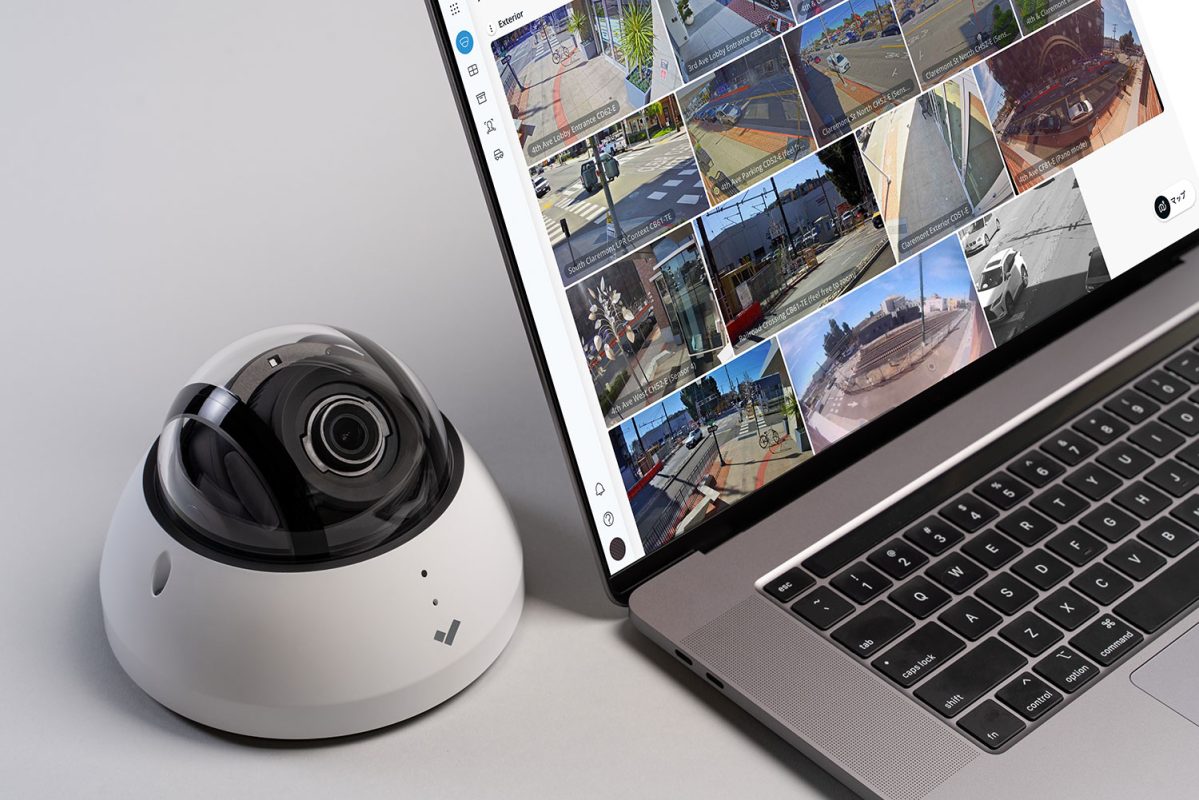
AI can help a commercial security system identify unusual activity quickly, but identifying an event and understanding what is actually happening are not always the same thing.
That is where human-verified video monitoring becomes important.
AI-assisted cameras can recognize people, vehicles, movement, restricted-zone activity, and other configured events across multiple video feeds. A trained monitoring professional can then review the footage, consider the context, and determine whether the activity appears normal, requires attention, or should be escalated.
For commercial properties, the combination of AI and human video monitoring can provide a more practical approach than relying on either technology or human observation alone. AI helps identify what deserves attention. Human verification helps determine what that activity means and what should happen next.
What Is Human Verified Video Monitoring?
Human verified video monitoring combines automated video analytics with review by a trained monitoring professional.
Rather than asking someone to continuously watch every camera, analytics can bring selected events to the operator’s attention. The operator then reviews the available footage before following the response procedures established for the property.
The distinction matters because cameras often see activity without understanding all of the circumstances around it.
A person walking through a fenced area after hours may deserve attention. But that person could also be an authorized employee working overtime, a maintenance contractor with scheduled access, or a delivery driver who has been instructed to enter through a particular gate.
AI can help identify the person and the activity. Human verification provides the additional judgment needed to decide whether that activity actually requires a response.
Why Isn’t AI Alone Enough for Remote Video Monitoring?
AI-assisted video analytics can process large amounts of information quickly. It can help identify movement, classify objects, recognize certain behaviors, prioritize alerts, and reduce the amount of routine footage a monitoring team needs to review.
Those capabilities are useful, but commercial properties are complicated environments.
People do not always follow the same schedules. Vendors arrive early. Employees stay late. Construction schedules change. Deliveries are delayed. Weather affects camera views. Animals enter exterior areas. Temporary contractors may be working somewhere they normally would not be.
An analytic system may correctly detect the activity while still lacking the operational context needed to determine what it means.
For example, detecting a person in a loading area at midnight can be technically accurate. Whether that activity is suspicious depends on whether the business has an authorized delivery scheduled for midnight.
That difference between detection and interpretation is why human verification remains important.
AI Finds the Event. People Interpret the Context.
AI and human video monitoring work best when each handles the part of the process it is better suited for.
AI can continuously analyze camera activity without getting distracted or tired. Instead of asking a person to monitor dozens of quiet camera feeds, the system can bring selected events forward for review.
The monitoring professional can then ask questions that require context.
Is this person authorized to be here?
Is this vehicle expected?
Is the property normally active at this hour?
Is someone actually attempting to enter a restricted area, or are they walking past it?
Did the same person appear on another camera?
Is the activity continuing, or was it only momentary?
Does the site’s response plan call for an audio warning, a property contact, continued observation, or another form of escalation?
The technology helps narrow the operator’s attention. The person provides the judgment needed to decide what the alert represents.
Authorized Employees Can Look Unusual to an Automated System
After-hours activity is one of the clearest examples of why human verification matters.
Imagine a manufacturing facility that normally closes at 7:00 p.m. An employee enters the parking lot at 10:30 p.m. and walks toward a side entrance.
An AI-assisted system may identify a person entering the property outside normal hours. That may be exactly what the system was configured to detect.
But an alert does not automatically mean the person is unauthorized.
The employee could have been called back to address an equipment problem. A supervisor may have approved overtime. The person could be part of a cleaning crew or another authorized shift.
A trained monitoring professional can review the video along with the site’s established procedures and available information before deciding what happens next.
This is especially important for commercial properties with rotating shifts, seasonal schedules, maintenance work, or employees who occasionally need access outside normal operating hours.
Vendors and Contractors Create Another Layer of Complexity
Commercial properties regularly depend on people who do not follow employee schedules.
HVAC technicians, electricians, cleaning crews, landscapers, snow-removal contractors, delivery companies, maintenance teams, and other vendors may arrive before or after standard business hours.
Their appearance may also change from visit to visit.
A vendor may arrive in a different truck. A substitute employee may complete the job. A contractor might access a different part of the property because the work assignment changed.
A camera analytics system can identify that a person or vehicle entered a monitored zone. A human reviewer can consider whether the activity fits the property’s expected operations.
This is one reason a good Virtual Guard program needs more than cameras and analytics. It also needs clear operating instructions.
Businesses should establish which contractors have access, where they are expected to work, when scheduled activities normally occur, and who should be contacted when something does not match the plan.
Human verification becomes more useful when the monitoring team has accurate information to work with.
Deliveries Do Not Always Follow the Schedule
Delivery areas are another common source of legitimate activity that can appear unusual.
Warehouses, manufacturing facilities, marinas, apartment properties, dealerships, and other commercial operations may receive deliveries at different times throughout the week.
A scheduled truck may arrive two hours late. Another delivery may appear much earlier than expected because the driver’s route changed. A vendor may use a different loading area because the normal dock is occupied.
An automated system can detect the vehicle and its movement.
A monitoring professional can determine whether the situation makes sense based on the property, the time, the location, and the response instructions.
If the activity appears normal, unnecessary intervention may be avoided.
If a vehicle is moving through an area where deliveries are not permitted, remains on the property unusually long, or approaches a restricted location, the event may require closer attention.
The point is not that people are always correct and AI is not. The benefit comes from using both sources of information together.
Weather Can Create Activity Without Creating a Security Event
Outdoor commercial security cameras operate in changing conditions.
Rain, snow, wind, fog, shadows, blowing debris, moving vegetation, reflected light, and changes in visibility can all affect what cameras see.
This is particularly relevant in the Northeast, where commercial properties may experience snow and ice during the winter along with changing daylight conditions throughout the year.
Modern video analytics can filter many routine environmental events. However, difficult conditions can still create ambiguous images or activity that requires review.
A monitoring professional may be able to recognize that movement near a fence is caused by a branch blowing in the wind rather than a person approaching the property.
The operator may also recognize when weather has made the camera view too unclear to confidently determine what is happening.
That second situation is just as important.
Human verification should not mean forcing a conclusion from poor video. Sometimes the correct response is acknowledging that there is not enough visual information and following the procedure established for an uncertain event.
Animals Can Trigger Accurate but Unimportant Detections
Animals are another good example of the difference between detecting activity and determining its importance.
Commercial properties with large outdoor areas may regularly experience wildlife. A camera may observe an animal moving near a fence, storage area, parking lot, or construction zone.
Good analytics can distinguish many animals from people or vehicles, but no system should be treated as perfect in every environment.
Distance, lighting, partial obstruction, weather, or an unusual camera angle can make classification more difficult.
Human verification gives the monitoring process another level of review before unnecessary action is taken.
This becomes particularly useful across large exterior properties where operators need to focus on events that actually require attention rather than spending time responding to harmless movement.
Unusual Schedules Are Normal for Many Commercial Properties
One of the biggest challenges with automated security rules is that businesses change.
A property may normally close at 6:00 p.m., but stay open late during inventory. A marina may have different operating patterns during the summer. A construction site may begin work earlier during hot weather. A warehouse may add a temporary overnight shift during a busy period.
Commercial security needs to account for those changes.
If the monitoring system treats every deviation from a normal schedule as a threat, it can generate unnecessary events.
If the rules become too broad in an attempt to avoid those alerts, important activity may receive less attention.
Human verification provides flexibility between those extremes.
An operator can evaluate what is visible based on the property’s current procedures instead of treating every unusual event exactly the same way.
That flexibility is particularly important for businesses with seasonal activity, rotating employees, temporary projects, or frequent vendor access.
What Happens After a Human Verifies an Event?
Human verification should be connected to a clear response plan.
After reviewing the available video, the operator determines which response matches the situation and the instructions established for that commercial property.
If the activity appears normal, the event may simply be documented or closed according to procedure.
If someone appears to be in an area without authorization, the operator may continue observing the situation, contact an approved property representative, or use a configured audio deterrence system when appropriate.
If circumstances indicate that additional escalation is needed, the operator follows the property’s designated procedures.
The important point is that the response follows the verified situation, not simply the fact that an alert occurred.
That helps distinguish human-verified monitoring from systems that automatically treat every detection as requiring the same action.
Human Verification and Live Audio Deterrence
Human review becomes particularly important when a Virtual Guard system includes voice-down or remote speaker warnings.
An automated alert by itself should not necessarily cause a speaker to broadcast a warning.
Imagine an employee walking toward a secured area to complete approved maintenance. An automatic message telling the employee to leave could create confusion and reduce confidence in the system.
A trained operator can review the situation first.
If the activity appears unauthorized and the property’s response procedures allow audio intervention, the Virtual Guard may then issue an appropriate warning through compatible speakers.
If the person leaves, the event can be documented.
If the activity continues, the operator can follow the next step in the response plan.
This combination of automated detection, human verification, and measured intervention helps make monitoring more useful without assuming that every alert represents the same level of risk.
Why Human Verification Matters for Liability and Operational Awareness
Commercial video surveillance is not only about theft or unauthorized entry.
Many businesses use cameras to improve operational awareness and create a record of what occurred around their property.
A monitoring professional may review events involving deliveries, contractors, gates, parking areas, loading docks, pools, exterior walkways, or other monitored locations.
For property managers, manufacturers, marinas, construction companies, and other commercial operators, understanding the context of an event can be just as important as detecting it.
A person running through a parking lot could represent a concern, or it could simply be an employee trying to get out of the rain.
A vehicle stopping near a loading area might be unusual, or it may belong to a scheduled contractor.
Human verification helps add context before the event is classified and before unnecessary action is taken.
Recorded video and monitoring records may also help businesses review reported incidents later. Their usefulness will depend on factors such as camera positioning, image quality, retention settings, available footage, and the circumstances surrounding the event.
Video monitoring should not be described as guaranteeing a particular insurance, legal, or liability outcome.
Where Human Verified Video Monitoring Can Be Useful
Human verified monitoring can support commercial properties where the environment involves a mix of authorized and unauthorized activity.
Construction sites are a good example. Workers, subcontractors, supervisors, deliveries, equipment operators, and visitors may all move through the property. At the same time, the site may need additional oversight around equipment, storage areas, entrances, and after-hours activity.
Apartment complexes may have residents, guests, contractors, delivery drivers, maintenance crews, and property-management staff entering shared areas at different times.
Marinas have seasonal schedules, members, vendors, maintenance staff, vehicles, docks, storage areas, and other activity spread across large properties.
Dealerships may have employees, customers, service technicians, transport drivers, cleaning crews, and vehicles moving throughout the lot.
Warehouses and manufacturing facilities can have changing shifts, loading schedules, contractors, truck traffic, employee entrances, and restricted areas.
In each case, AI can help identify the activity that deserves attention. Human verification helps determine whether that activity fits the way the property normally operates.
AI and Human Monitoring Are Not Competing Approaches
It can be tempting to frame commercial security as a choice between automated technology and human monitoring.
In practice, the stronger approach is often to use them together.
AI is particularly useful for processing large numbers of camera feeds and bringing defined events to an operator’s attention. That can reduce the need for a person to continuously watch hours of routine video.
Human monitoring is particularly useful when an event requires context, judgment, or a decision about what response is appropriate.
The workflow becomes:
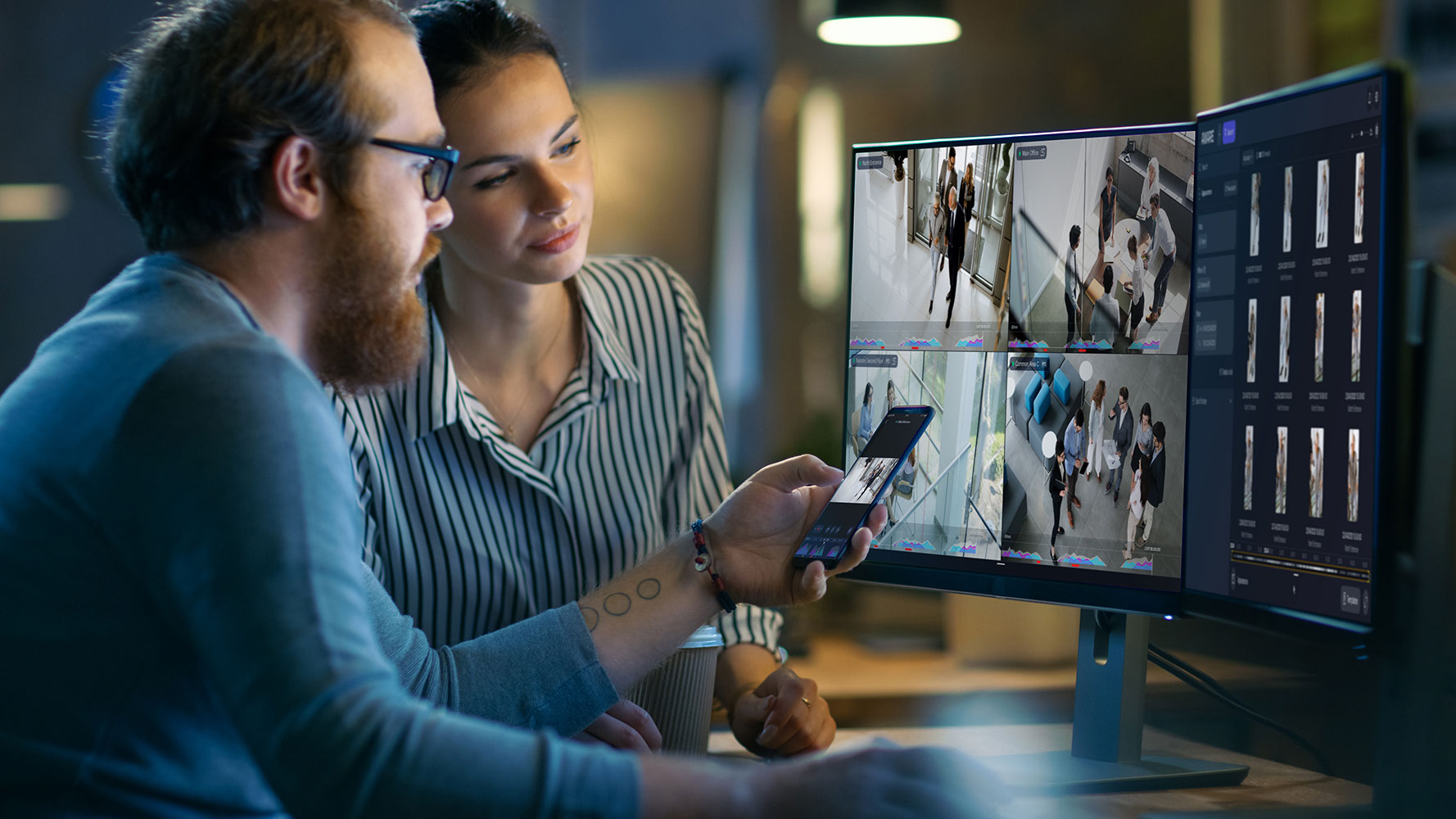
AI identifies → Human reviews → Response follows
That is different from expecting AI to make every security decision independently.
It is also different from expecting a monitoring professional to manually watch every camera continuously and notice every relevant event without technological assistance.
Each part of the system supports the other.
What Human Verification Cannot Guarantee?
Human verification improves context, but it does not eliminate every limitation of video surveillance.
An operator can only make decisions based on the information available.
If a camera cannot see an area clearly, human review cannot recreate what is outside the field of view. Poor lighting, obstructions, network issues, low image quality, weather conditions, or incorrectly positioned cameras can all limit what can be verified.
Operators can also make mistakes. Human verification should therefore be supported by training, clear response procedures, appropriate camera design, accurate property information, and periodic review of monitoring rules.
Businesses should be cautious of providers that describe either AI or human monitoring as flawless.
A practical security program recognizes the limitations of both and builds procedures around them.
What Should Businesses Ask About Human Verification?
When evaluating a remote video monitoring service, businesses should ask how human review fits into the monitoring process.
A useful conversation should explain what types of events trigger review, what information the operator receives, and what happens after an event is verified.
Businesses should also understand how the provider handles legitimate after-hours activity, contractors, deliveries, changing schedules, and unclear camera views.
Another important question is how monitoring instructions are updated.
If a property adds an overnight shift, changes a gate schedule, begins a construction project, or hires a new vendor, the monitoring team may need updated information. A system built around outdated operating conditions can create avoidable confusion even when the technology is functioning correctly.
The quality of the service therefore depends on more than detection accuracy. Communication, system design, operator procedures, and ongoing support all matter.
Human Verification Should Be Designed Around the Property
Every commercial property has its own definition of normal activity.
A marina at 6:00 a.m. may look very different from an office building at the same hour. A construction site may have changing work zones from one week to the next. A manufacturing facility may operate continuously while another closes every evening.
That is why human-verified video monitoring should be configured around the business rather than applied as a generic template.
A good monitoring plan can account for operating hours, access points, expected deliveries, authorized vendors, restricted zones, audio-warning procedures, and escalation contacts.
As the property changes, the monitoring plan should change with it.
Technology provides the tools. Human judgment and good planning help make those tools useful.
Frequently Asked Questions About Human Verified Video Monitoring
What is human verified video monitoring?
Human verified video monitoring uses video analytics to identify selected activity and a trained monitoring professional to review the footage before deciding what response is appropriate. AI helps direct attention to an event, while human verification adds context that automated detection may not fully understand.
Why do security cameras need human verification if they use AI?
AI can recognize patterns, objects, movement, and configured events, but it may not know why an activity is occurring. Human reviewers can consider factors such as employee schedules, authorized vendors, deliveries, weather conditions, property procedures, and other circumstances before determining whether an event requires action.
Can human verification help reduce unnecessary security responses?
Human review can help distinguish legitimate activity from events that may require attention. For example, an operator may recognize an authorized contractor, scheduled delivery, animal, or weather-related movement before following a more serious response procedure. Results depend on the available video and information provided for the property.
What happens when a monitoring operator confirms suspicious activity?
The operator follows the response procedures established for the property. Depending on the circumstances and system configuration, that may include continued observation, contacting an approved representative, issuing an audio warning, documenting the event, or following an established escalation procedure.
Does human-verified monitoring replace AI video analytics?
No. Human verification and AI video analytics perform different roles. Analytics can help identify and prioritize activity across multiple cameras, while trained monitoring personnel interpret the context and determine which response fits the situation.
What types of commercial properties can use human-verified video monitoring?
Human verified monitoring can support commercial environments such as construction sites, apartment properties, marinas, dealerships, warehouses, manufacturing facilities, self-storage properties, parking areas, loading docks, and other sites where legitimate and potentially concerning activity may occur within the same monitored areas.
Combine Intelligent Detection With Informed Human Response
AI has changed what commercial security cameras can detect and how quickly monitoring teams can identify activity across a property. But faster detection is only part of an effective response.
The next question is still: What is actually happening?
Human-verified video monitoring brings trained review into that decision. It allows AI to handle the continuous work of identifying selected events while monitoring professionals apply context to determine whether the activity is routine, requires attention, or should move to the next step in the property’s response plan.
Sourced Security Solutions works with commercial businesses to build video surveillance and Virtual Guard systems around the way their properties actually operate. That includes camera coverage, analytics, remote monitoring, response planning, and ongoing support.
For businesses in Connecticut and supported areas of Rhode Island, contact Sourced Security Solutions to discuss how AI-assisted monitoring and human verification can fit into a practical commercial security strategy.