
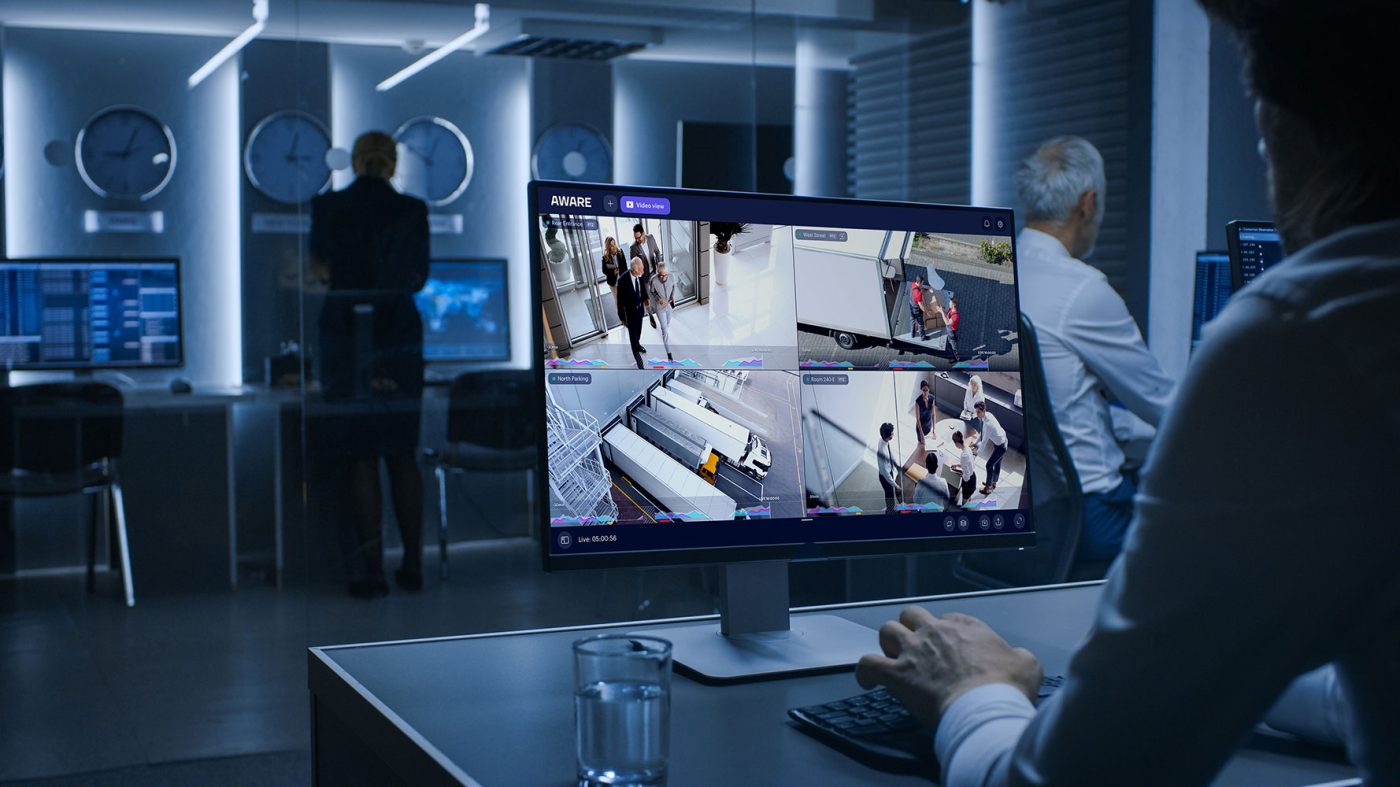
Live audio deterrence allows a remote security professional to speak through on-site speakers when suspicious or unauthorized activity is identified at a commercial property. Instead of only recording what happens, a monitored security system can provide an audible warning while an event is still developing.
This approach is sometimes called voice-down security, audio intervention, remote speaker warning, or live talk-down monitoring. It is commonly used alongside commercial video surveillance and Virtual Guard monitoring to give businesses another response option between simply observing an event and escalating it further.
The important part is that voice-down security is not just a speaker attached to a camera. Effective live audio deterrence depends on good camera coverage, reliable event detection, appropriate audio equipment, human judgment, and a clearly defined response plan.
What Is Live Audio Deterrence Security?
Live audio deterrence security is a form of remote intervention that allows an authorized monitoring professional to communicate with someone at a commercial property through installed speakers.
For example, a camera may detect someone entering a restricted equipment area after business hours. A monitoring professional can review the video, determine whether the activity requires attention, and—when permitted by the property’s response plan—issue a warning such as:
“This area is closed. Please leave the property.”
The warning makes it clear that the activity has been noticed and that the property is being actively monitored.
That is an important distinction from traditional recorded surveillance. A standard camera can provide footage of an event after it occurs. A Virtual Guard system with audio intervention can provide an opportunity to address certain situations while they are happening.
Live audio deterrence does not guarantee that a person will leave or that an incident will be prevented. Its value is in providing another measured response option before circumstances require a different type of escalation.
How Does a Voice-Down Security System Work?
A voice-down security system typically begins with video surveillance.
Commercial cameras provide visibility into areas such as gates, parking lots, loading docks, building entrances, equipment yards, pools, storage areas, construction zones, and exterior perimeters. Depending on the system, video analytics or other configured alerts can identify activity that should be reviewed.
Once an event is brought to the monitoring team’s attention, the operator looks at the available video and determines what appears to be happening.
This human review matters.
Someone walking through an area is not automatically a threat. The person could be an employee working late, a contractor completing scheduled work, a delivery driver, a tenant, or someone else who has a legitimate reason to be there.
If the activity appears unauthorized and the property’s procedures allow audio intervention, the operator can communicate through an on-site loudspeaker.
The response does not have to end with the warning. If the person remains on the property or the circumstances become more serious, the operator can follow the next step in the site’s established escalation plan.
In other words, the process is generally:
Detect → Review → Warn when appropriate → Observe the response → Escalate when necessary → Document the event
This is what makes live audio deterrence useful as part of Virtual Guard monitoring. The goal is not to broadcast warnings every time a camera detects movement. The goal is to use video context and predefined procedures to determine when an audible intervention makes sense.
Live Voice-Down vs. Prerecorded Audio Warnings
Not every audio security system works the same way. Some use live operator communication, while others use prerecorded messages triggered by a defined event.
Both can have a place in commercial security.
| Audio Response | How It Works | Best Suited For |
| Live voice-down warning | A monitoring professional reviews the situation and speaks through a property speaker | Events where context and a situation-specific response are important |
| Prerecorded warning | A predefined message plays when configured activity is detected | Repetitive or predictable situations where a standard message is appropriate |
| No audio intervention | The operator observes and follows another response procedure | Situations where speaking could be inappropriate, ineffective, or unsafe |
A prerecorded message might be appropriate at a gate or property boundary where the same rule applies every night. For example, a standard message can notify someone that a particular area is closed.
Live voice-down offers greater flexibility. A monitoring professional can respond to the circumstances that are actually visible rather than relying on the same message for every event.
The right approach depends on the property and the type of activity being monitored. In some cases, a combination of prerecorded and live warnings may make sense.
The Cameras and Speakers Matter
Live audio deterrence works as part of a larger security system. The quality of the response depends heavily on what the monitoring professional can see and whether the warning can be clearly heard where it is needed.
Commercial Security Cameras
The operator needs a useful view of the monitored area before deciding whether intervention is appropriate. Camera placement should provide enough context to understand what is happening, not simply confirm that motion occurred.
Lighting, nighttime image quality, obstructions, weather conditions, distance, and camera angle can all affect what the operator sees.
A speaker near a parking lot is of limited value if the cameras cannot show why a person is there.
Outdoor and Indoor Loudspeakers
Speakers should be positioned so that warnings are understandable within the intended monitoring zone without unnecessarily broadcasting them throughout unrelated parts of the property.
A loading dock, gated entrance, equipment yard, commercial pool, and marina dock may each require a different audio design.
Volume also matters. A warning needs to be audible above normal environmental noise, but simply making a speaker louder does not automatically make the system more effective.
Microphones and Two-Way Audio
Some security equipment also includes microphones or two-way audio capabilities. This requires additional planning.
A system can sometimes provide outbound voice-down warnings without continuously recording conversations. If microphones or audio recording are part of the system, businesses should understand exactly what is being captured, when recording occurs, where the equipment is located, who can access the audio, and what legal or policy requirements apply.
Video surveillance and audio recording should not automatically be treated as the same thing.
How Does a Virtual Guard Decide When to Use a Voice-Down Warning?
A good audio intervention policy begins before an incident occurs.
When a Virtual Guard program is established, the business and security provider should define which areas are monitored, what activity should generate attention, when audio intervention is permitted, and what should happen if the warning does not resolve the situation.
Context is especially important.
Consider a loading dock at a commercial facility. A person standing near the dock at 10:00 a.m. may be part of a normal delivery. The same person remaining near secured equipment long after the facility has closed may require additional review.
A monitoring professional should be able to consider factors such as the time of day, monitored zone, visible behavior, business schedule, known deliveries, authorized personnel, and existing site instructions before speaking through the system.
The warning itself should also fit the situation.
The purpose is generally to communicate a clear instruction, not to create an unnecessary confrontation. An operator may identify the monitored area, state that the property is being observed, and direct the individual to leave or move away from a restricted location.
If the person follows the instruction, the operator can continue observing and document what occurred. If the activity continues or becomes more serious, the site’s escalation procedure determines what happens next.

Where Can Live Audio Deterrence Be Used?
Live audio deterrence can be useful at commercial properties where cameras provide visibility but management wants an additional way to address activity remotely.
Construction Sites
Construction sites can contain equipment, materials, temporary fencing, changing access points, and areas that may be lightly staffed after normal work hours.
Voice-down security can support after-hours monitoring around entrances, equipment areas, storage zones, and other designated sections of the site.
Sourced Security‘s broader Virtual Guard approach can also support specialized construction monitoring, including configured safety-related applications such as hard hat and high-visibility vest detection. Those applications should be treated separately from after-hours audio deterrence because workplace safety monitoring and unauthorized-property access involve different response procedures.
Commercial Swimming Pools
Pools at apartment complexes, marinas, clubs, and other commercial properties can create both access and liability concerns.
If someone enters a pool area outside approved hours, a monitoring professional may be able to review the activity and issue an appropriate warning through nearby speakers.
Video surveillance and access control can also provide additional context around gates and entrances.
Marinas and Docks
Marinas can include large exterior areas, docks, parking spaces, offices, storage locations, fuel areas, and seasonal operations.
Remote speaker warnings may provide another way to address unauthorized activity around designated areas without requiring someone to continuously watch every location from the property itself.
Auto Dealerships
Dealerships often have large exterior lots with valuable vehicles accessible from multiple areas.
Live audio intervention may be useful when monitoring identifies someone remaining in a closed inventory area, attempting to access a restricted location, or engaging in other activity that requires review after business hours.
Self-Storage Facilities
Self-storage properties can have gates, drive aisles, building entrances, exterior units, and customer access occurring across a large property.
Voice-down monitoring can help address certain after-hours or restricted-area events after the activity has been reviewed.
Apartment and Multi-Tenant Properties
Apartment communities and multi-tenant commercial properties may use monitored cameras around selected common areas, parking areas, exterior entrances, and pools.
These environments require particularly thoughtful response procedures because legitimate residents, tenants, guests, delivery drivers, contractors, and service providers may be on the property at different times.
Manufacturing, Warehouses, and Equipment Yards
Large commercial and industrial properties frequently have loading zones, vehicle gates, exterior equipment, employee parking, restricted areas, and after-hours operations.
Live audio deterrence may complement video surveillance and access control by allowing monitoring personnel to address certain unusual events without assuming that every after-hours person or vehicle is unauthorized.
When Is an Audio Warning Not the Right Response?
Voice-down security is useful because it adds another response option. That does not mean it should be used for every situation.
An audio warning may be inappropriate when the operator cannot clearly determine what is happening. If a camera view is blocked, lighting is poor, or an alert provides insufficient context, speaking to the person could create confusion rather than resolve it.
There may also be situations in which direct communication could unnecessarily escalate an already volatile event. A serious emergency may require a different response procedure rather than spending time attempting a voice-down intervention.
Audio warnings may also be inappropriate in areas where privacy expectations, property policies, operational requirements, or applicable law restrict the use of audio equipment.
The response plan should therefore define both when an operator may speak and when the operator should not.
That distinction is one of the reasons human-reviewed Virtual Guard monitoring can be valuable. Security decisions should be based on the circumstances visible at the property rather than automatically broadcasting a warning whenever motion occurs.
Privacy and Audio Recording Considerations
Businesses should approach audio-enabled surveillance more carefully than video-only monitoring.
Laws governing audio recording, interception, notification, and consent can vary depending on the state, the location of the equipment, the people being recorded, and how the audio is captured or stored. Employee policies, leases, contracts, and industry requirements may create additional considerations.
There is also an important technical distinction between using a speaker to deliver a warning and using a microphone to capture or record conversations.
A business considering audio-enabled security should determine whether microphones are necessary at all. If they are, the system design should clearly establish where audio is captured, whether it is recorded, how long recordings are retained, who can access them, and whether notices or other procedures are needed.
Cameras and audio equipment should also avoid locations where people would reasonably expect privacy.
For commercial properties operating in Connecticut, Rhode Island, or multiple states, the safest approach is to review the planned use of audio with qualified legal counsel and the security provider before enabling audio recording capabilities.
The technology should be configured around the property’s actual legal and operational requirements rather than assuming the same audio settings are appropriate everywhere.
Live Audio Deterrence Works Best as Part of a Larger Security Plan
A remote speaker alone is not a complete security strategy.
Audio intervention becomes more useful when it is connected to properly positioned cameras, event detection, trained monitoring professionals, access information, and a documented response plan.
For example, an exterior gate may be protected by access control while cameras provide visual confirmation of who is approaching. If activity occurs outside approved hours, the monitoring system provides context before an operator determines whether a voice-down warning is appropriate.
If the person leaves, the event can be documented.
If the person remains or attempts to enter a restricted area, the operator can follow the next step in the response plan.
This creates a more complete sequence than simply receiving a motion alert or reviewing footage the following morning.
For businesses, that difference is important. The objective is not more alarms. It is better information and a clearer process for responding when something actually requires attention.
Live Audio Deterrence vs. an On-Site Security Guard
Live audio deterrence should not automatically be described as a complete replacement for every physical security guard.
There are responsibilities remote personnel cannot perform. A Virtual Guard cannot physically secure an open door, remove someone from a property, provide an escort, inspect damaged equipment, or perform other tasks that require an on-site presence.
However, some commercial properties do not need a person physically stationed at every monitored location throughout every hour of the day.
For those properties, Virtual Guard monitoring and audio intervention may help reduce reliance on certain on-site guard posts while providing visibility across multiple camera views and selected areas.
Whether remote, physical, or hybrid security is appropriate depends on the property, operating environment, risk level, and response requirements.
What Should Businesses Ask Before Adding Voice-Down Security?
Before adding live audio deterrence, businesses should understand more than whether a camera supports a speaker.
Ask what triggers operator review, who decides when a warning is issued, whether warnings are live or prerecorded, and what occurs when someone does not respond.
It is also important to understand whether the system records incoming audio, how speaker locations are selected, which areas will receive monitoring, and how authorized employees, vendors, tenants, customers, and contractors are distinguished from activity that actually requires intervention.
Finally, make sure the response procedures fit the property.
A marina should not use the same monitoring rules as a manufacturing facility. A commercial pool requires different considerations than an equipment yard. A construction site during an active shift is different from the same site at midnight.
The technology should follow the operational plan—not the other way around.
Frequently Asked Questions About Live Audio Deterrence
What does live audio deterrence mean?
Live audio deterrence allows a remote monitoring professional to issue an audible warning through speakers installed at a commercial property. The warning is typically used after video or another monitored event provides enough context to determine that intervention is appropriate.
What is a voice-down security system?
A voice-down security system combines video monitoring with on-site speakers that allow a remote operator to communicate with someone at the property. Depending on the system, messages may be delivered live by an operator or through prerecorded warnings triggered by configured events.
Is a live voice-down warning better than a prerecorded warning?
Neither option is automatically better. Prerecorded messages can work well for predictable events where the same instruction is appropriate, while live voice-down allows a monitoring professional to tailor the message to the situation visible on camera.
Does live audio deterrence require microphones?
Not always. Speakers can be used to deliver outbound warnings without necessarily recording incoming conversations. If microphones or two-way audio are used, the business should evaluate privacy, recording, storage, notification, and legal requirements before activation.
Can voice-down security work with existing commercial cameras?
It may be possible to add audio intervention to an existing surveillance system, but compatibility should be evaluated first. Camera views, image quality, network connectivity, monitoring-platform compatibility, speaker placement, and existing equipment all affect the appropriate design.
What types of businesses can use live audio deterrence?
Live audio deterrence may support construction sites, commercial pools, marinas, dealerships, self-storage facilities, apartment communities, parking areas, warehouses, manufacturing facilities, loading areas, and equipment yards. The monitoring and response procedures should be customized for each property.
Add Active Intervention to Your Commercial Video Surveillance
Security cameras can tell you what happened. A properly designed Virtual Guard system can give your business another opportunity to address certain events while they are happening.
Live audio deterrence can connect video surveillance, remote monitoring, human review, and on-site speakers into a defined response process. But the effectiveness of that process depends on system design, camera coverage, property conditions, and clear rules for when intervention is appropriate.
Sourced Security Solutions works with commercial clients to design video surveillance, access control, and Virtual Guard monitoring around the way each property actually operates.
If your business is located in Connecticut or a supported area of Rhode Island, contact Sourced Security Solutions to discuss whether live audio deterrence and Virtual Guard monitoring are appropriate for your property.