
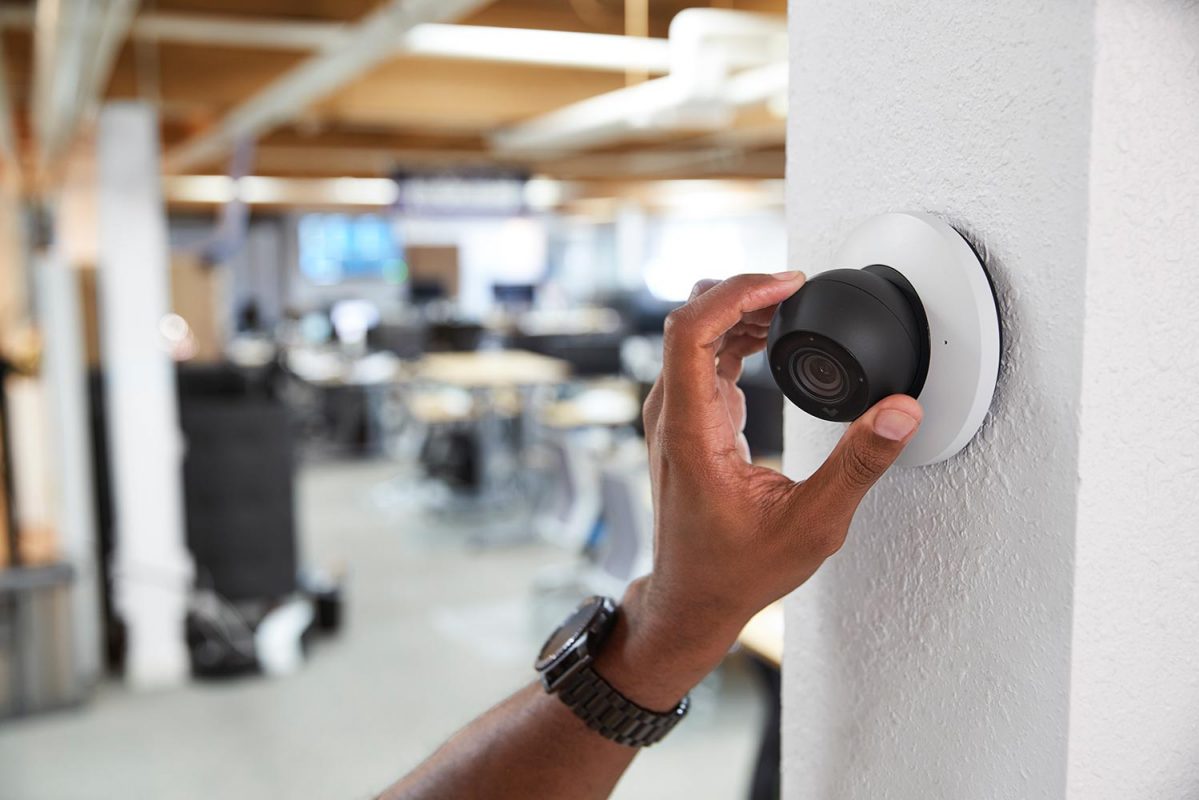
Commercial facilities often have a lot of movement throughout the day. Employees, visitors, vendors, contractors, deliveries, and management teams may all move through the property at different times. With that much activity, it can be difficult to keep track of what is happening in every important area.
That is why a well-planned security camera system can be valuable.
At Sourced Security, we help commercial facilities improve visibility, support incident review, and protect important areas through commercial video surveillance, access control, monitoring, and virtual guard monitoring.
Why Commercial Facilities Need Better Visibility
Commercial properties often include several high-activity areas. These may include entrances, reception areas, offices, storage spaces, employee-only areas, exterior doors, parking lots, delivery areas, and shared spaces.
Cameras can help owners and managers review incidents, monitor activity, and better understand what happened when a concern is reported. They can also provide visibility into areas that are difficult to watch consistently during normal business hours.
The key is proper placement. A camera system should be designed around how employees, visitors, vendors, and other authorized personnel move through the property.
Camera Placement for Commercial Properties
Commercial facilities may benefit from camera coverage near entry points, exterior doors, parking areas, reception spaces, storage areas, delivery zones, and other key areas where activity needs to be monitored or reviewed.
For example, cameras near entrances can help document who enters and exits the property. Cameras near storage or operational areas can help provide visibility into spaces where important equipment, inventory, or business materials may be kept. Exterior cameras can help monitor parking areas, side entrances, loading areas, or other access points around the building.
Sourced Security can help business owners choose camera locations that support operations without disrupting the normal flow of the property.
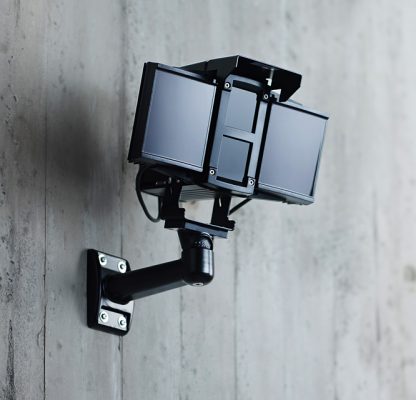
Supporting Incident Review and Liability Awareness
Security footage can be useful when a business needs to review a reported incident. This may include property damage, visitor concerns, workplace incidents, delivery issues, unauthorized access concerns, or after-hours activity.
Cameras do not prevent every problem, but they can provide important context when management needs to understand what happened. Clear footage can help business owners make more informed decisions and maintain better internal records.
Because liability and insurance matters can be complex, businesses should work with their insurance provider or legal advisor for formal guidance. Sourced Security can help provide the camera and monitoring tools that support visibility and incident documentation.
Access Control for Employee-Only and Restricted Areas
Many commercial facilities have areas that should be limited to employees, managers, vendors, or approved personnel. This may include offices, storage rooms, equipment rooms, staff entrances, supply areas, or other restricted spaces.
Access control can help reduce reliance on traditional keys and make it easier to manage who can enter certain areas. For businesses with multiple employees, vendors, or changing staff, this can support a more organized approach to property access.
Sourced Security can help identify where access control makes sense and how it can work alongside the camera system.
Virtual Guard Monitoring for After-Hours Activity
Some commercial facilities may also benefit from virtual guard monitoring. This can be helpful for exterior doors, parking areas, delivery zones, back entrances, and other spaces that may need additional oversight when the business is closed or lightly staffed.
Virtual guard monitoring can work alongside cameras and other monitoring tools to provide another layer of awareness. It is especially useful for businesses that want added visibility outside normal operating hours.
Privacy-Aware Camera Planning
Commercial facilities should be thoughtful about where cameras are placed. Cameras should be used in appropriate public, operational, shared, and exterior areas. They should not be placed in private spaces where people have a reasonable expectation of privacy.
Sourced Security can help businesses plan camera placement in a way that supports visibility while respecting privacy expectations.
Final Thoughts
Security cameras can help commercial facilities improve visibility, review incidents, and monitor important areas. When combined with access control, monitoring, and virtual guard monitoring, the system becomes part of a stronger layered security plan.
Contact Sourced Security to discuss security camera, access control, monitoring, and virtual guard options for your commercial facility.
Frequently Asked Questions
How does Loss Prevention and Liability: Security Camera Strategies for Hospitality and Restaurants help reduce theft in restaurants?
Loss Prevention and Liability: Security Camera Strategies for Hospitality and Restaurants uses strategically placed cameras to deter theft by both customers and employees, making it harder to steal food, cash, or equipment without detection.
Can Loss Prevention and Liability: Security Camera Strategies for Hospitality and Restaurants protect a hospitality business from false liability claims?
Yes, Loss Prevention and Liability: Security Camera Strategies for Hospitality and Restaurants can capture clear footage that serves as evidence in court or insurance claims, helping businesses defend against false accusations of injury or slip-and-fall incidents.
Where should cameras be placed for effective Loss Prevention and Liability: Security Camera Strategies for Hospitality and Restaurants?
Effective Loss Prevention and Liability: Security Camera Strategies for Hospitality and Restaurants include positioning cameras at entry/exit points, cash registers, storage areas, parking lots, and in dining rooms to cover all critical zones.
Are high-definition cameras necessary in Loss Prevention and Liability: Security Camera Strategies for Hospitality and Restaurants?
High-definition cameras are recommended in all Loss Prevention and Liability: Security Camera Strategies for Hospitality and Restaurants because they provide clear identification of faces and license plates, ensuring reliable evidence when needed.
Does implementing Loss Prevention and Liability: Security Camera Strategies for Hospitality and Restaurants require staff training?
Yes, staff must be trained in proper camera use, data privacy laws, and how to respond to footage review requests so that any implementation of Loss Prevention and Liability: Security Camera Strategies for Hospitality and Restaurants remains legal and effective.